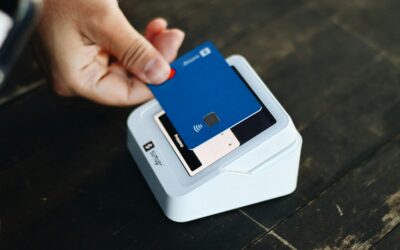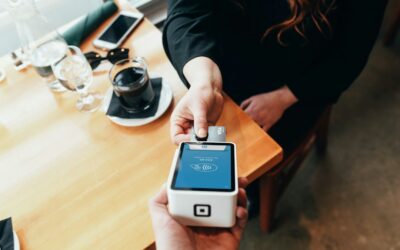


A payment card with a fingerprint sensor directly on the plastic has been operating in four countries for several years. Jordan Kuwait Bank was the first to commercially issue it on December 8, 2021 in the Mastercard World Elite version, Poland's Bank Pocztowy launched it in the same month, Turkey's Garanti BBVA in February 2024, and Bangladesh's Eastern Bank in July 2025. The fingerprint replaces entering a PIN — you press your thumb on a small sensor in the corner of the card and the chip itself decides whether to authorize the payment. The key difference compared to mobile payments is that the biometrics are done by the card itself, not the device in it. When activated, a mathematical template of the fingerprint is stored in the chip (not a photo that could be reconstructed retrospectively), and every subsequent payment is made locally. The fingerprint never leaves the plastic rectangle — the bank, merchant, or terminal cannot see the biometric data.
Apple Pay and Google Wallet work differently: biometrics unlock the phone, not the card itself. But for a Czech merchant, it is indistinguishable from the terminal — it is always a standard contactless payment via EMV. So will we see it? Moreover, the market itself is giving a clear signal that a biometric card is not guaranteed to be the next standard. BNP Paribas has been selling it in France since 2021 and closed commercialization on December 8, 2025. Analyst Alan Goode of Goode Intelligence said in July 2025 that biometric cards „have failed to meet expectations“ and expects only 54 million of them by 2030 — a fraction of the billions of regular cards in circulation.
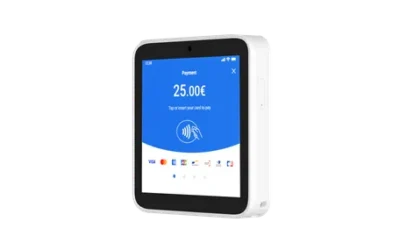
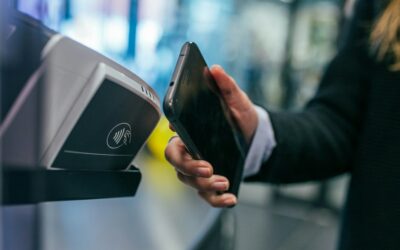
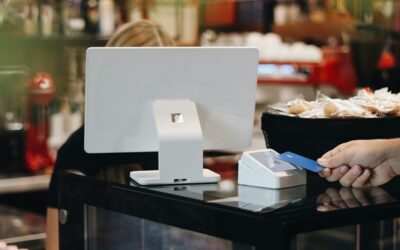
For a Czech merchant who accepts cards at a terminal or via a payment gateway, nothing changes in practice. From the perspective of your terminal, a biometric card looks like any other contactless payment – the protocol is identical, the billing and fees are the same. If you were to ever accept a biometric card from a tourist from Poland or Turkey, the terminal would process it in the same way as, for example, a Visa from Komerční banka.
So don't prepare for anything in the short term — no terminal or gateway modification is needed. In the medium term, the technology may also come to Czech banks (the precedent in Poland is 400 km from the border), but according to the current market reaction, slowly and in the premium segment. One more important detail is worth mentioning. According to the ECB, in 2021, fraud without the physical presence of the card (CNP, mainly on the Internet) accounted for 84 % of the value of card fraud in SEPA (bank transfers). The biometric card only solves the remaining 16 % — theft and misuse in a brick-and-mortar store. Therefore, 3D Secure (online card verification), tokenization and robust fraud detection on the payment gateway side are much more important for e-shops. In our payment gateway offer This security is standard.
Glossary of terms
- EMV — global standard for chip payments (Europay, Mastercard, Visa), which is used by every Czech terminal.
- CNP transactions (Card-Not-Present) — a card payment where the card is not physically present — typically online in an e-shop.
- 3D Secure — a security layer for online payments that requires additional verification of the cardholder (SMS code, push in the bank, biometrics in the application).
- Tokenization — replacing the card number with a random token that cannot be used outside of a specific business relationship; standard for Apple Pay and for storing cards in an e-shop.
- SEPA — Single Euro Payments Area, 36 European countries with harmonised rules for payments in euros.
- PSD2 — the European Payment Services Directive, which introduced mandatory strong authentication (SCA) and opened up banking data to licensed third parties.