

Biometric cards are slowly bypassing PINs: in France for 24 euros per year, not yet available in the Czech Republic. Let's first look at what a biometric card actually is.
The biometric payment card — a plastic card with a built-in miniature fingerprint scanner — has been around for several years on the French retail market and is now starting to become a viable alternative to PIN, even for higher amounts. The main issuers are BNP Paribas and Crédit Agricole, Societe Generale (or the Czech Komerční Banka group) is preparing its own solution. Apart from France, similar cards are issued by banks in Great Britain, Switzerland and Sweden. In the Czech Republic, no bank is currently offering a biometric card commercially.
What's new about it?
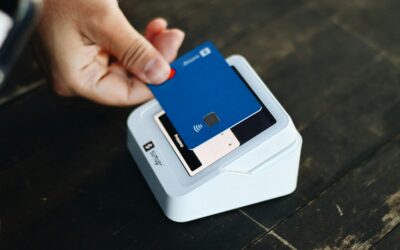
The fingerprint is being stored directly to the card, not to the bank or the merchant. When paying, the card compares the fingerprint locally and only when it matches, authorizes the transaction. The client places his finger instead of typing the PIN, and at that moment the limit for contactless payments is eliminated — in France today 50 euros, in the Czech Republic 500 CZK for contactless payment without verification. Biometrics effectively means that even a purchase for 5,000 CZK can be made by simply touching the card.
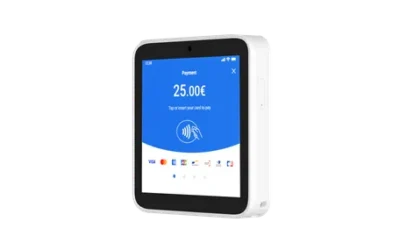
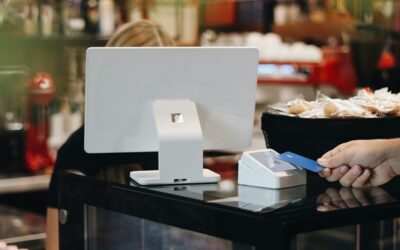
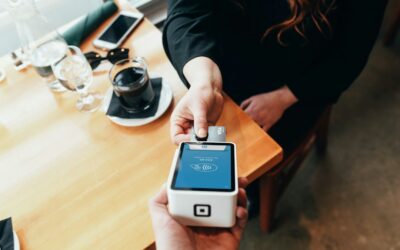
Here is some good news for traders: most of today's contactless terminals are already compatible. So there is no need to change hardware or invest in upgrades. If the card client fails or the biometric scanner has a problem (injured finger, dirty hand), the PIN remains as a backup path.
Price for the client: BNP Paribas charges for the biometric option an additional approx. 24 euros per year to the regular card fee. It is not free for issuers — a chip with a scanner is more expensive than a classic contactless chip — and so far it is hindering mass deployment in the Czech Republic, where banks hold free cards as a significant marketing item.
In terms of security, it's a step forward. PINs can be spied on, guessed, or captured through phishing. Fingerprints are practically impossible to guess. Plus: after the pandemic, there is a growing preference for "contactless" payments, also for hygiene reasons. Biometrics logically fits in here.
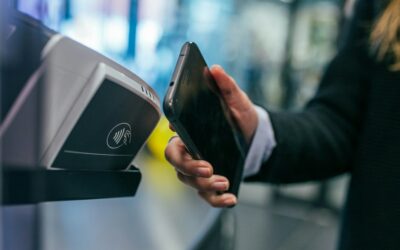
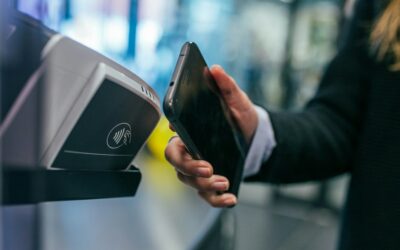
A slightly different question is how a biometric card competes with Apple Pay and Google Pay. They use biometrics natively and are already free and widely used in the Czech Republic. A biometric card is suitable for clients who do not use their mobile phone to pay or whose battery runs out quickly.
What does this mean for you?
For a brick-and-mortar store (gastro, retail): In the short term, a biometric card is not an investment for you — your terminals already handle it. The shopping process will be a little faster: no need to type in your PIN for purchases above the limit.
For the higher segment (jewelry, electronics): a customer with a biometric card pays CZK 30,000 with a single swipe instead of a PIN dialogue. If your target is abroad (tourists from France, UK), this may affect the purchase conversion rate.
Long term: watch to see if any of the Czech banks announce biometrics. So far, it looks like a package of premium cards (Komerční banka, ČSOB, Raiffeisenbank) will come first — not a free mass card.
What should you take away?
- Biometric card is verified by fingerprint directly on the card; the data does not go out to the bank or the merchant.
- The main advantage for the customer: the contactless payment limit disappears; even thousands of crowns can be paid with a single touch.
- No bank in the Czech Republic issues it yet; in France it costs an additional 24 euros per year.
- Your current contactless terminals will probably already handle it — you don't need to change any hardware.
- Competition for biometric cards is primarily Apple Pay / Google Pay, not a classic card with a PIN.
Glossary of terms
- Biometric card — a payment card with an integrated fingerprint scanner for transaction authorization.
- Contactless limit — the amount up to which the card is verified at the terminal without a PIN or biometrics; in the Czech Republic 500 CZK, in France 50 €.
- Tokenization — replacing the card number with a code (token) at the merchant; used by Apple Pay and Google Pay, among others.
- PIN — Personal Identification Number, a four- to six-digit code for verifying the cardholder.
- NFC — Near Field Communication, a technology for wireless data transmission over short distances; the basis of contactless payments.