

The government has approved EET 2.0. It will be launched on January 1, 2027, with the first month being a pilot. The Ministry of Finance expects an annual contribution to public budgets of around 14.4 billion crowns. The key difference compared to the original EET (2016–2020) is in the scope: non-cash payments will now also be registered — cards and QR codes physically accepted in a shop or restaurant. Invoices and online transactions from account to account will not be subject to registration. The proposal is now heading to the Chamber of Deputies and the Senate.
What has changed?
EET 2.0 is a deliberately „lightweight“ version. The Ministry of Finance has limited the amount of data that the entrepreneur sends: only total amount, place and time of sale — no VAT, no items of goods, no customer data. Paper receipts are being abolished and are issued only on request. For the smallest entrepreneurs with annual income of up to 1 million crowns, who are in the first flat tax band, there will be EET-off mode — instead of registering, they pay 1,500 CZK per month in flat-rate taxes (compared to today's 100 CZK). They do not have to register sales.
In addition to the registration itself, the government also approved tax breaks: VAT on non-alcoholic beverages in gastronomy decreases from 21 % to 12 % a Tips for restaurant employees are exempt from income tax and social security contributions. According to Finance Minister Alena Schillerová, this is intended to motivate restaurant employees to report tips, which will improve their official salary (= easier access to a mortgage or loan). Economists and the opposition (ODS) are currently cautiously considering whether the proposal will actually bring in 14 billion and whether the exemption for the flat-rate tax in the 1st zone will actually pay off.
What does this mean for you?
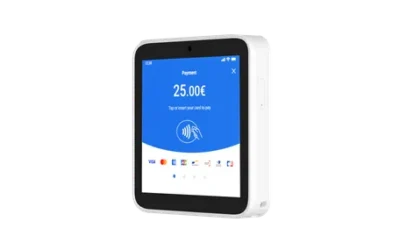
If you accept card or QR code payments in a brick-and-mortar store, restaurant, or branch — are you in the frame. Cashless payments have never been subject to registration before, so it is a completely new duty for most merchants. Existing cash register systems should be able to send data with the update; the Financial Administration will publish technical instructions in mid-June 2026 and will launch the free "My EET" application for the smallest entrepreneurs from December.
E-shops that issue invoices or accept payments via a payment gateway from account to account are not directly affected by EET — but if they also operate a physical collection point or accept payments in a terminal, that operation falls under the register. The gastro segment will receive a positive side effect: lower VAT on non-alcoholic beverages + exempt tips. For small sole proprietors with annual sales below CZK 1 million in the 1st flat rate band, on the other hand, it is necessary to calculate whether the EET-off regime (CZK 1,500/month) will be cheaper than purchasing a cash register solution.
What should you bring?
- Take inventory of your payment points. Write down where you physically accept payments — via terminal, cash, QR code. Online payments via account-to-account gateways do not belong to EET.
- Check your POS system. Most modern POS solutions (Dotykačka, Storyous, iKelp, Markeeta and others) should be able to handle EET 2.0 with an update. If you are using an older system, ask your supplier now whether it will be ready by December 2026.
- Calculate EET-off. If you are in the 1st flat tax band and your annual sales are below CZK 1 million, EET-off (CZK 1,500/month) will exempt you from the need for registration. Compare this with the costs of a cash register solution.
- Gastro: get ready for reduced VAT. From January 1, 2027, soft drinks in the gastro from 21 % to 12 %. Update the price list and cash register.
- Watch June 2026. In mid-June, the Financial Administration will publish technical guidelines for POS system developers. This is a key moment when you will know if your supplier is up to speed.
Glossary of terms
- EET — electronic records of sales, mandatory sending of information about sales (amount, place, time) to the Financial Administration in real time.
- EET-off — an exemption regime for small entrepreneurs with annual sales of up to CZK 1 million in the 1st flat tax band. Instead of registration, they pay a fixed amount of CZK 1,500/month.
- Flat tax — simplified regime for self-employed persons, where instead of declaring personal income tax + social and health insurance, they pay one fixed amount per month. It has 3 bands according to annual income.
- QR payment — payment by mobile phone by scanning a QR code (typically via a banking application), in EET 2.0 it is recorded in the same way as a card payment.
- Cash register system — software and hardware (terminal, tablet, mobile phone) that accepts payments, records sales and communicates with the Financial Administration.
- Student and kindergarten discount — tax breaks that the government is re-introducing as part of the same package (they were abolished by the consolidation package in 2024).