

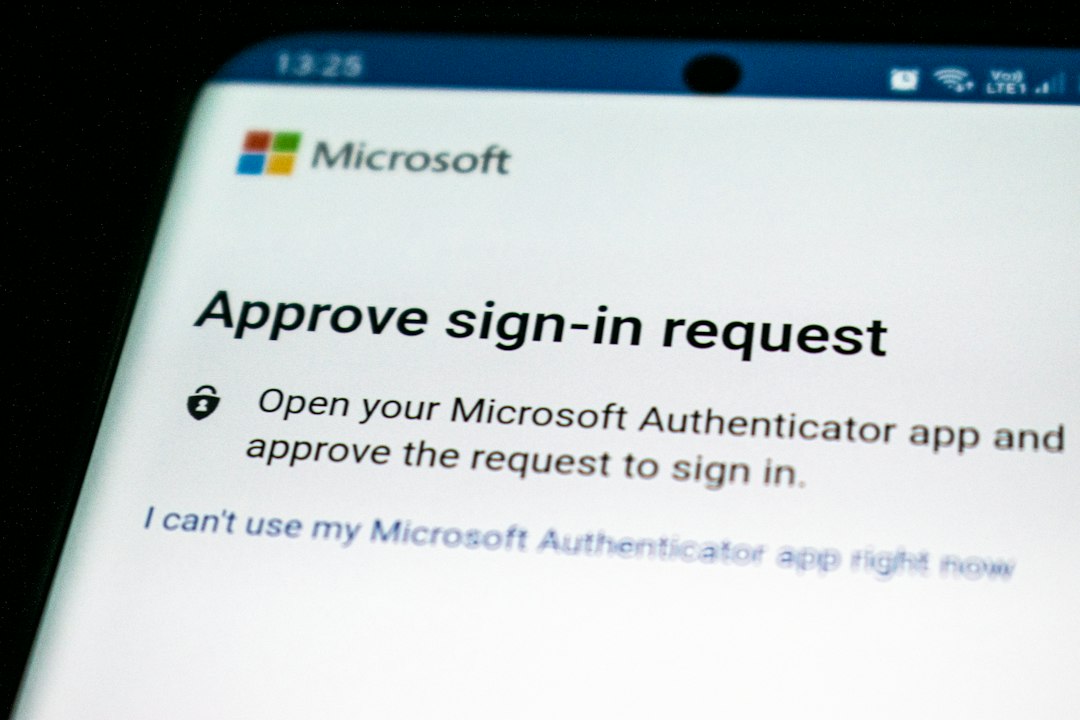
The free MOJE eet application will require two-factor authentication with each login. The Financial Administration has specified how entrepreneurs will log in to MOJE eet — a free application that the state is preparing for small entrepreneurs to record sales from January 2027. A username and password will not be enough. Each login will require second verification step: either a code from an authentication application such as Authenticator, or a code sent by SMS. Without a second factor set up, the login will not be completed. Anyone who will log in with a Google or Apple account will not set up the second factor separately in MY eet. However, they must have it active directly for that account. The system will check when logging in whether it is turned on, and if not, it will not let the user continue.
So far, MOJE eet has been talked about mainly in terms of "it will be free and who will it be enough for". Now operational details have been added, and they change the idea of how the application will be used on a daily basis. Two things are worth noting. First, It will not be a downloadable mobile app.. The Financial Administration is preparing a responsive web application that the entrepreneur will open in a regular browser on a phone, tablet or computer. The device must therefore be online. Secondly, MY eet does not stand alone — registration units and other requirements will be managed via Tax Information Box Plus (DIS+) on the MY TAXES portal. The financial administration expects that from November 1, 2026 Sales recording functions, including the generation of cash certificates, will be made available in DIS+.
Compared to commercial POS systems, this is a different login model than what merchants are used to. A standard POS application from SumUp, myPOS, Dotypay or Global Payments or domestic POS suppliers usually keeps the operator logged in and allows access to the terminal via PIN. A web application with a mandatory second factor at every login is more secure, but slower at the counter — and problematic in operation without a stable signal.
Let us also recall the limit: MY eet is intended for entrepreneurs with a maximum two registration units. There is no limit to the number of sales. Anyone who cannot fit into it or for whom a simple solution is not enough can choose their own cash register system — sales records are not based on one mandatory cash register.
What does this mean for you?
For an entrepreneur with one establishment It's mainly a matter of phone and signal. If you rely on an SMS code, you need coverage at the point of sale. The authentication app generates codes offline, but sending the sales transaction itself requires internet anyway. For gastro and shift operations is a less convenient model. A web application with two-factor login assumes one person with one account. As more people take turns at the cash register or more shifts run, friction increases and the temptation to share login details increases — which is exactly what the second factor is designed to prevent. We are also preparing the opportunity for you to compare cash register systems - we are working intensively on a solution.
Glossary of terms
- Two-factor authentication (2FA) — a login that requires a second proof of identity in addition to a password, typically a one-time code.
- Authenticator — an application on your phone that generates one-time login codes at regular intervals, even without an internet connection.
- DIS+ (Tax Information Box Plus) — a secure interface of the Financial Administration on the MY TAXES portal for communication with the office.
- Cashier's certificate — an electronic certificate used to identify the cash register when sending sales data to the Financial Administration.
- Registration unit — the place or channel where the entrepreneur receives sales: a business, a website or app, a vehicle, or the entrepreneur himself.
- Responsive web application — an application running in a browser that adapts to the screen size; it is not installed from the app store.