black chopsticks in white ceramic bowl on table

Payment terminals are changing Czech tipping: when does a gesture of gratitude become psychological pressure?

by | 27.May.2026 | Blog

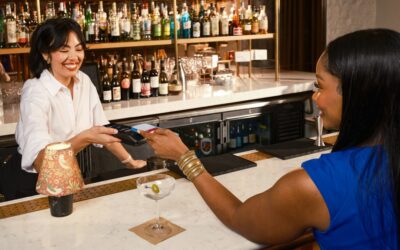
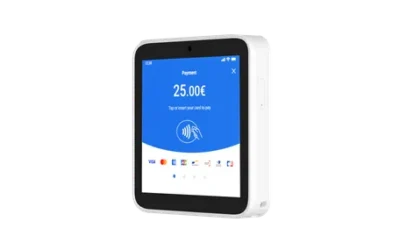
The Czech tip is undergoing a quiet revolution. When a guest is presented with a paper bill after lunch, he or she decides for themselves whether to add ten, twenty or fifty crowns. Today, the waiter or waitress hands them a payment terminal with three preset buttons — typically 5 %, 10 % and 15 % — and the guest must actively refuse one of the offers. The publicist Médium.cz uses the example of practice in Czech gastronomy to describe how what used to be a voluntary expression of satisfaction has turned into something that some guests perceive as a psychological test of decency.

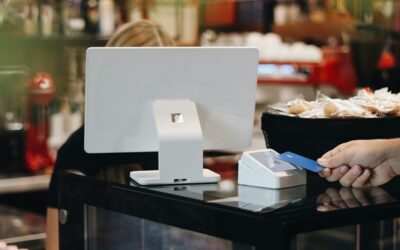
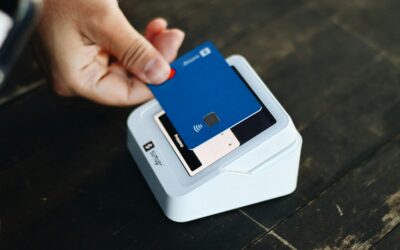
Tipping no longer starts at the table, but on the terminal display.

Pre-set tip screens are not a Czech specificity — they come from American practice, where tipping is culturally and wage-wise necessary, and have been brought to Europe in recent years primarily by mobile acquirers such as SumUp, Dotypay, Teya or Comgate. Bank terminals (KB SmartPay, ČSOB, Global Payments) also offer the same function. For restaurant operators, setting up the buttons is a matter of one click in the administration, and with most providers it works across models from pocket readers to desktop POS.

The difference with the old gastro culture is who comes first with the suggestion of the amount. Previously, it was the guest, today the terminal. It is tempting for entrepreneurs — according to observations abroad, the average tip typically increases after the introduction of tip screens. The question is whether in the Czech Republic, where the service charge is often part of the price and where people are not used to the American model, it does not have the opposite effect: not to a higher tip, but to the fact that people start paying in cash or stop visiting the restaurant.


What does this mean for you?

For the Czech operator, this is not just a technical setting, but a question of customer experience. In the short term, the prefix 10 % or 15 % can significantly increase the turnover from tips — especially in fast service, where the guest does not have time to think. In the medium term, however, there is an increasing risk that some guests will stop coming because they feel under pressure; or that the pressure to tip will shift attention from the quality of the food and service to the feeling that the guest is being milked. In the long term, a regulatory debate may arise — some European countries are already discussing whether to have mandatory transparency "all tips go to the staff" or a ban on preset tip screens.

For e-shops and services outside of gastronomy, it is less pressing, but even there, "contribute to the rounding" buttons are starting to appear in the payment gateway. Same principle, different situation.


What should you take away?

  1. Think about whether you even want a tips screen. If you have a loyal circle of guests who are used to leaving 10 % in cash, the buttons on the terminal may hurt you more than help you.
  2. If you turn it on, choose reasonable amounts. The 5–10–15 % dial is more acceptable in the Czech Republic than the American 18–22–25 % model. Higher dials create a feeling of pressure.
  3. Communicate where the tip goes. Guests will be happy to contribute when they know that the staff and not the operator will actually receive the money.
  4. Measure the result. Most terminal systems (Dotypay, SumUp, Storyous) can show statistics on how many guests tipped and what the average amount was — see if the change helped or hurt.
  5. Always keep the „no tip“ option visible. A hidden or small „Skip“ icon feels like manipulation and will damage a business’s reputation faster than anything else.


About the author

Radomir Januch
I simply enjoy the world of business and I am lucky that it is also my job. I mainly focus on the world of payments and technology. I was initially marginal in the world of payments, but now I focus only on them in Business. In Business, he is in charge of content and comparison of payment terminals, he has been in business/fintech for 5 years.

Other articles

Aplikace MOJE eet je zdarma, čas ale ne.

The MOJE eet application is free, but time is not.

The free MOJE eet application saves money at the cash register, but each payment takes time. With 30 customers a day, it can be an extra hour of work - the records are not exactly fast and certainly not automated. The Financial Administration is preparing a free web application for small businesses...

read more
myPOS nově podporuje karty Diners a Discover

myPOS now supports Diners and Discover cards

This month, merchants will be able to accept cards from Diners Club International® and Discover®*. With one simple software update, they will gain access to millions of premium and international cardholders from over 185 countries. What this means for merchants: Millions...

read more
Halloween táhne tržby, jste připraveni?

Halloween is driving sales, are you ready?

This year's All Souls' Day will be the last without EET. And right now, you are preparing for the peak season: the Heureka comparison site reports a year-on-year increase in interest in costumes of approximately 10 %, and chocolate figurines and bars have almost doubled, according to it. On the other hand, interest in cemetery candles is approximately...

read more
Odložené platby se stanou regulovaným úvěrem

Deferred payments become regulated credit

According to the news server Kurzy.cz, the Senate has an amendment to the Consumer Credit Act on its agenda since October 21, 2026, which transposes the European directive CCD2 (revision of the Consumer Credit Directive) into Czech legislation. According to Michal Kročil from Skip Pay, this means the end of...

read more
Shoptet kupuje Jarabot: AI zákaznická podpora pro e-shopy

Shoptet buys Jarabot: AI customer support for e-shops

Shoptet, the largest Czech-Slovak e-commerce platform, announced the acquisition of Czech company Jarabot, which focuses on customer care automation, shopping assistants and sales support. The aim is to strengthen the offer of AI tools for online merchants. Financial terms and conditions are not disclosed...

read more
Může někdo zaplatit mým zamčeným telefonem?

Can someone pay with my locked phone?

The fear that someone on the tram will put a terminal to your pocket and withdraw money from your phone is spreading repeatedly. This is not possible with regular payments in stores: Google now requires verification with a screen lock, i.e. a PIN, gesture, password or biometrics, for payments in stores....

read more
Snížit poplatky na polovinu? Opravdu?

Cut fees in half? Really?

A new player claims to cut payment fees in half. In addition to Visa and Mastercard, an alternative based on account-to-account payments is making its presence felt on the Czech market. According to Hospodářské noviny, it is being backed by Mo.one, headed by Jakub Kodelka, and promises to cut fees by half...

read more