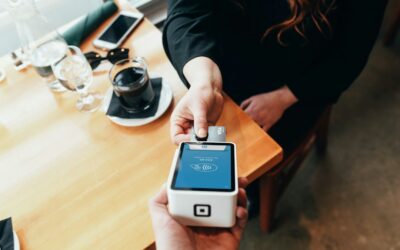


When talking about digital payments, it often sounds like a big technological topic. But in the daily operation of a small business, it is much simpler. A convenience store, bistro, smaller retail or service does not need complex theory. They need the customer to pay quickly, the service staff did not delay, the owner had an overview of the money and the operation was not unnecessarily complicated.
This is what is interesting about the article published on Vietnam.vn, which quotes statements from Visa Vietnam and Laos. The text describes that small and medium-sized businesses encounter inefficient payment processes, such as manual payment matching, more complex cash flow control, or poorer separation of business and personal expenses. These are not abstract problems. These are exactly the things that, in a small operation, determine whether an entrepreneur has a system or chaos.
And here is an interesting parallel between Vietnam and the Czech Republic. The environment is different, customer habits may differ, but the daily reality of small businesses is surprisingly similar. When the store is busy, no one wants to wait to pay. When it's closing time for the evening, the owner needs to quickly know what's been credited to the account, what's left in cash, and if anything is out of place. And when a business has multiple sales channels or more staff members, ease of payment becomes even more important.
This applies equally to small Czech businesses and Vietnamese entrepreneurs, including the Vietnamese retail community in the Czech Republic. Many smaller shops and bistros operate at a fast pace and with a strong emphasis on daily operations. In such operations, it becomes clear very quickly whether a payment solution helps or hinders. If tracking payments is unnecessarily complicated, expenses are unclear or the handover of shifts is complicated, time is lost, which is often the most expensive item in a small business.
Therefore, the article from Vietnam should not be read as just a local report about one company or one brand. It is more useful to take from it a more general, but very practical lesson: small businesses need a payment solution that corresponds to real-world operations. Not only to accept cards or other digital payments, but also to keep money in order, simplify sales control, and reduce the amount of manual administration.
This is also important because in small businesses, operations and growth do not happen separately. When payments are slow, service takes longer. When there is poor visibility of money, it is harder to plan purchases, shifts or investments. When the owner cannot easily see expenses and income, it is harder to make decisions. And when the system only works half-heartedly, the business hits its limits sooner than it should.
From the available source, it is not possible to draw strong conclusions about the entire market or the specific effectiveness of individual solutions. It is more cautious and useful to say this: the topic well captures the real pressure that small businesses in different countries are experiencing. They are not looking for „innovation“ for the sake of innovation. They are looking for simplicity, speed of service, better control over money and less unnecessary extra work.
For Biznisa, this is a valuable editorial angle precisely because it is an experience that is understandable across markets. Whether it is a small shop in Vietnam or a convenience store, bistro or smaller retail in the Czech Republic, the basic need is similar: to have payments set up to help operations instead of hindering them.