

The Czech market continues to move towards digital payments. Publicly available media outlets based on Mastercard data repeat the same signal: most customers want to pay digitally, not only in e-commerce but also in brick-and-mortar establishments.
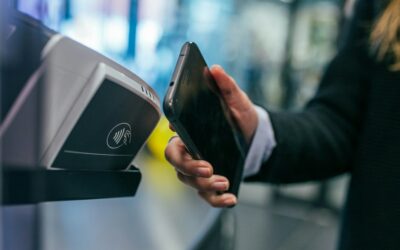
The facts from the sources are quite clear. In brick-and-mortar stores, 85% of customers prefer digital payments, while in online stores 95% prefer online. Mobile contactless payments, payment cards and wearable electronics are prominent in stores. In online stores, digital wallets and card payments are among the most common methods. Sources also state that the introduction of modern payment technologies can increase sales by 18% for merchants on average.
What is important for entrepreneurs is what lies behind these numbers. Today, customers do not only evaluate the price or assortment, but also how easy it is to complete the purchase. If they cannot use their preferred payment method at a crucial moment, the risk of a lost purchase or a worse customer experience increases. This does not only apply to large stores. The impact is also visible in smaller establishments, services, gastronomy or mobile sales.
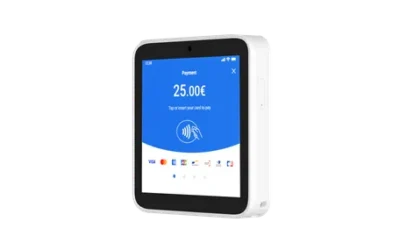
Our interpretation is therefore straightforward: the entrepreneur no longer only addresses the question of whether to accept cards, but also how broad and reliable the payment offer to the customer is. In some cases, a well-configured terminal will suffice. In others, a combination of a terminal, QR payments, online payment gateways or digital wallets makes sense. The type of operation, average spending, seasonality and customer expectations are decisive.
At the same time, not every number from similar surveys is automatically a universal guide for all segments. It is a strong market signal, not a guarantee of the same result in every establishment. Yet the trend is so significant that ignoring it is becoming increasingly risky for many entrepreneurs.
Good practice today is not just "taking cards". Good practice means removing friction when paying. The fewer obstacles between the decision to buy and the completion of the transaction, the greater the chance of higher conversion and happier customers.