

Slovak merchants must offer cashless payments from May 1, 2026. All you need is a terminal, QR code or bank transfer — but they can no longer refuse
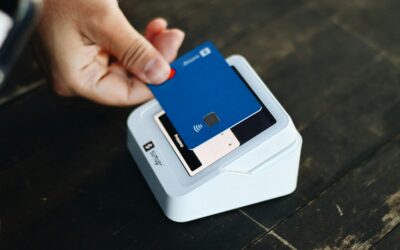
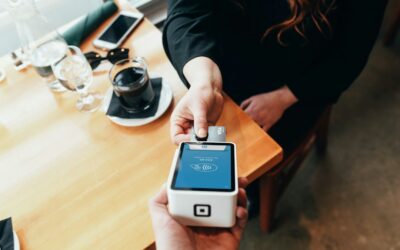
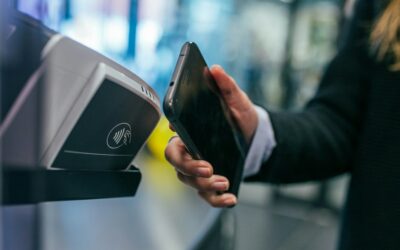
Slovakia has become the first country in the region where all merchants and entrepreneurs are obliged to enable customers to make cashless payments. The rule applies from May 1, 2026 and applies to every transaction over 1 euro. Parliament moved the deadline from the original March 1 to give smaller entrepreneurs time for technical preparation. The law does not prescribe a specific technology — one functional method is enough: a payment terminal, QR code or bank transfer. At the same time, the possibility of setting a minimum amount for card payments is eliminated, and merchants are not allowed to charge any additional fees for cashless payments.
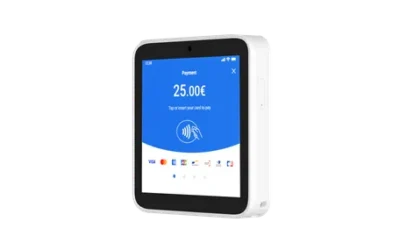
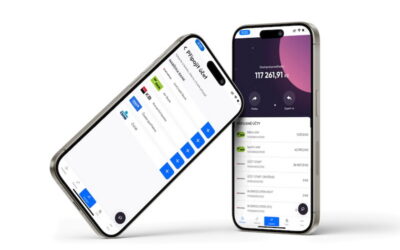
The key change is not that Slovaks suddenly decided to accept cards — cashless payments have long been working there, too. The change is that the state defines an obligation and opens up an alternative to the traditional terminal for entrepreneurs: QR payments connected via instant payments directly to the eKasa cash register. The Slovak Financial Administration describes three variants. The first is a QR code generated directly by the eKasa cash register — the system creates a unique code with the exact amount, the customer pays in the banking application, and the cash register receives a notification of the payment within a few seconds. The second is a static printed QR code with the merchant's IBAN, where the customer enters the amount manually. The third is a QR code generated in the merchant's banking application itself. While a terminal from a provider such as SumUp, myPOS, Comgate, or Global Payments costs a monthly fee and a percentage of the transaction, the QR variant can be almost free — but it has disadvantages: slower processing, dependence on the customer's mobile signal, and the need to manually check the payment in the static variant. In the Czech Republic, entrepreneurs have a free hand today and the EET regulatory framework is at a different stage than the Slovak eKasa reform.
What does this mean for a Czech entrepreneur?
Short term: if you have branches or an establishment in Slovakia, you must have at least one functional method of cashless payment in place by May 1. At the same time, banks there are not allowed to charge a fee for payment notifications until the end of 2027, if you use the technical solution of the Financial Directorate of the Slovak Republic for this - this means that the QR option will be financially affordable for small businesses. Medium term: the Czech government has not yet introduced any similar obligation, but the Slovak model is politically attractive - tax collection, the end of the gray economy, pressure for transparency. It is reasonable to follow it. Long term: even without regulation, the market itself is pushing. Consumers expect cashless payments, and businesses that only offer cash are losing customers. The Slovak obligation is more of a catch-up with reality than a revolution - and the same shift is taking place here, only organically.
What should you bring?
- If you do business in Slovakia, verify by May 1, 2026 that you have at least one functional cashless payment method — a terminal, a QR code connected to eKasa, or an IBAN.
- In terms of costs, compare: terminal (monthly fee + percentage of transaction) vs. QR payments (minimum fixed costs, but slower and less convenient for the customer).
- If you have an e-shop or establishment in the Czech Republic, check your competition — even without regulation, the absence of card payments is a competitive disadvantage today.
- Follow legislative developments in the Czech Republic. If a similar obligation arises, you will have a head start thanks to the fact that you already have a solution in place.
- Don't forget that in Slovakia, a merchant is not allowed to charge a surcharge for cashless payments or set a minimum amount — even in the Czech Republic, it is unnecessary to do so because it discourages customers and in some networks it is not even allowed.
Glossary of terms
Cashless payment — payment without physical cash, typically by card, mobile application or bank transfer. eKasa — Slovak system of electronic sales records, similar to the Czech EET. QR payment — instant bank transfer initiated by scanning a QR code in the mobile banking app. IBAN — the international bank account number format used in the EU. Immediate payment (instant payment) — a bank transfer that reaches the recipient within a few seconds, unlike a standard transfer (the next day). Acquiring — a card payment processing service for a merchant; it is provided by an acquirer, typically a bank or a specialized player (Global Payments, Comgate, KB SmartPay).