

The way customers tip has been changing significantly in recent times – whether it’s in cafes, restaurants, e-shops or services. Previously, it was a small “extra” as a thank you for a customer service job well done. Today, tips are often an integrated part of the payment process and appear even in places where we wouldn’t have expected them a few years ago. This trend also has an impact on entrepreneurs – either directly or indirectly.
Terminals actively “suggest” the amount of a tip
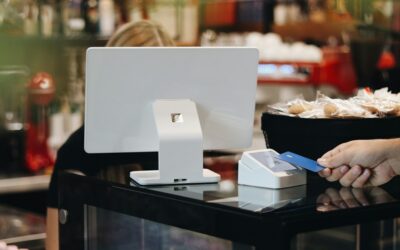
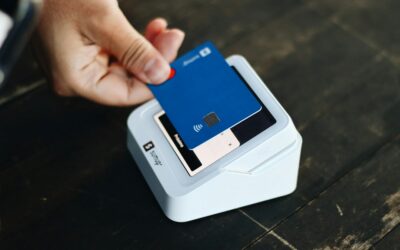
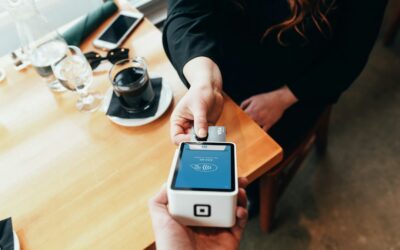
Modern payment terminals today commonly display the tip option as a percentage (e.g. 5 %, 10 %, 15 %). Whether it is a waiter in a bistro or a courier, the customer is prompted to add a reward when paying. Previously, amounts were rounded up, today tipping is more driven by technology than by the customer's impulse. Some payment solutions offer predefined fixed amounts, such as 10, 20 or 30 CZK, etc. We see on the market that providers are looking for various ways to increase the "tip".
Tipping before service?
The timing of when a customer tips is also changing. More and more often, customers are asked to add a tip before the service is even provided – for example, when making contactless payments or ordering online. If the service does not meet expectations, the tip is still paid and returns are not common. This somewhat negates the essence of tipping as we know it – it is supposed to be a reward, not an automatic part, at least in our region. There are countries where tips are entered automatically, but more on that in a moment.
Where we see a shift is, for example, the delivery of a package or food to your home. In ordering systems such as Bolt Food, you can tip the courier who brings your food in advance, but you can also do so afterwards. Taxi services are another area where tipping is almost standard. So you can see that large companies often use tipping, but if a small pizzeria delivers your food, it usually does not offer this service - while if you get a hot pizza with a smile on your face, you are happy to tip. Small traders are losing money on more couriers, which are increasingly difficult to find.
Tipping in the world of e-commerce
An interesting trend is the introduction of tipping in e-shops. Some platforms give customers the opportunity to contribute to warehouse or logistics people - even if they do not come into personal contact with them. This opens up a new way for retailers to motivate employees, but also to create an emotional connection with the customer.
Inspiration from the USA?
In the US, it is common to tip 15-20 % for almost everything – and this approach is slowly catching on in Europe. In some industries, tipping is now essentially a duty or expectation, not a bonus. This raises an important question for salespeople: Do we want to adopt this approach here? And how do we explain it to customers?
What can you do about it as a marketer?
- Consider integrating tipping into the payment process, but transparently.
- Offer a tip as an option – for example, only for certain services or people on the front line.
- Explain to customers why tipping is in place – whether it's team motivation or better service.
- Test different variations: flat rate, percentage, possibility of retroactive adjustment after service.
How can we help you?
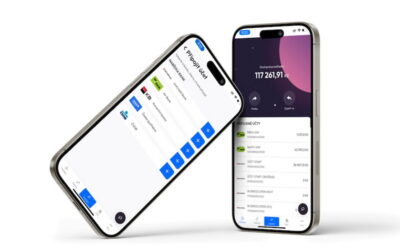
For all of our products in the catalog that we offer, you can choose whether they offer tips or not. Our recommendation is especially for small businesses to start using tips in their services, it can be an interesting improvement for your business. However, never cross a kind of "correct line" in which service and in what amount you ask for a tip. It can affect your relationship with the customer. Where can you recommend tips? Our suggestion is:
- restaurants and cafes
- services – for example, hairdressing, barbershops, beauty salons, health services, etc.
- delivery of goods or food
- taxi service